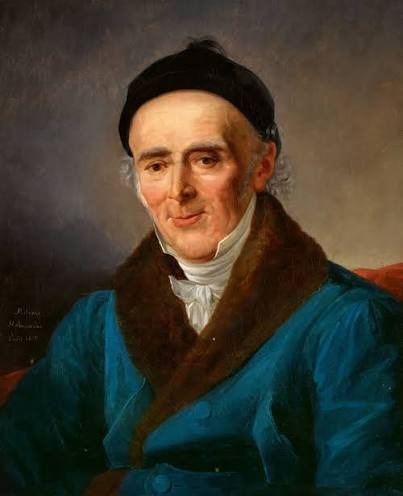
Dr. Samuel Hahnemann
A Giant of Medical Science & Humanitarian Compassion
Dr. Christian Friedrich Samuel Hahnemann was an influential German physician, respected chemist, toxicologist, polyglot translator, and the founder of Homoeopathy. Ahead of his era, Hahnemann developed the system of homoeopathic medicine through rigorous empirical experimentation and deep care for human life.
Early Life & Polymathic Genius
Born in Meissen, Germany, Hahnemann displayed prodigious intellectual gifts from an early age. By age twelve, he was assisting in teaching classical Greek. He achieved absolute mastery over eight languages, including German, Latin, Greek, Hebrew, Arabic, English, French, and Italian. He pursued medical studies at Leipzig and Vienna, earning his Doctor of Medicine (MD) with highest honors from the University of Erlangen in 1779.
The Moral Crisis & Renunciation of Brutal Medicine
In the late 18th century, orthodox medicine relied heavily on heroic, agonizing practices: extensive venesection (bloodletting until syncope), toxic calomel (mercurial purging leading to loss of teeth), massive emetics, and caustic blistering. Horrified by the realization that these aggressive interventions aggravated suffering and hastened death rather than restoring health, Hahnemann made the ethical decision to renounce active clinical practice:
"My sense of duty would not permit me to treat the unknown pathological state of my suffering brethren with these unknown medicines... The thought of becoming in this way a murderer or a malefactor towards the life of my fellow human beings was most terrible to me."
To support his growing family, Hahnemann turned to translating seminal chemical, medical, and botanical treatises, utilizing his profound multilingual scholarship to cross-examine world medical literature.
The 1790 Cinchona Bark Experiment
In 1790, while translating William Cullen's renowned Materia Medica from English into German, Hahnemann encountered Cullen's assertion that Peruvian bark (Cinchona officinalis, source of quinine) cured ague (intermittent malarial fever) solely because of its extreme bitterness and astringent effect on the stomach.
Unsatisfied with this superficial explanation (noting that many bitter substances lacked any antimalarial power), Hahnemann performed a historic act of self-experimentation: he took four drams of good China (Cinchona bark) twice a day in robust health.
The Birth of the Law of Similars:
To his astonishment, Hahnemann experienced cold extremities, palpitations, shivering, throbbing headache, and intense fever, matching the exact symptomatic picture of ague. When he discontinued the bark, the symptoms disappeared. Repeated trials on himself and colleagues confirmed the observation: the therapeutic virtue of a medicine lies in its ability to produce symptoms resembling the disease it treats (Similia Similibus Curentur).
The Essay in Hufeland's Journal
In 1796, after six years of careful human drug provings, Hahnemann published his landmark essay in Hufeland's Journal: "Essay on a New Principle for Ascertaining the Curative Powers of Drugs", marking the formal birth year of Homoeopathic Science.
Masterworks Authored by Dr. Samuel Hahnemann
The foundational literature that forms the bedrock of classical homoeopathic medical education worldwide.
Organon of the Healing Art
The philosophical and practical foundation of homoeopathic medicine. Hahnemann systematically revised it across six editions, refining case-taking methodology, vital force dynamics, potentisation, and LM potencies.
Materia Medica Pura
A monumental 6-volume compilation documenting the exact subjective and objective symptoms generated by 67 proven medicines tested on healthy human volunteers, completely free from unverified clinical speculation.
The Chronic Diseases
After 12 years of clinical research into why chronic diseases tended to recur, Hahnemann introduced his understanding of Miasms (Psora, Sycosis, Syphilis) and deep-acting constitutional remedies.
Key Contributions of Dr. Samuel Hahnemann
Discoveries that helped shape the development of pharmacology, psychiatric care, and public health.
Humane Psychiatric Care (1792)
At the Georgenthal Asylum in 1792, Hahnemann treated the mentally ill Hanoverian minister Klockenbring using kind, respectful, and non-violent therapy without chains or beatings, decades before Pinel in France.
Hygiene, Diet & Sanitation
Hahnemann championed clean drinking water, room ventilation, moderate exercise, personal hygiene, and isolation during cholera epidemics decades before Joseph Lister and Louis Pasteur.
Human Pharmacology Trials
He established the scientific standard that drugs must be systematically proven on human beings in health to understand their full biological and emotional effects.
Invention of Potentisation
He discovered serial dilution with mechanical succussion (dynamisation), which removes toxic chemical matter while activating the curative power of the substance.
Hahnemann's Legacy at Being Well Clinic
At Being Well Homoeopathic Clinic in Sector 125 Kharar, Dr. Pallavi Saini and Dr. Sulabh Sharma uphold Dr. Hahnemann's classical principles in everyday clinical practice:
- Single Simillimum: We never practice polypharmacy or mix arbitrary remedies.
- Individualised Totality: Taking 45 to 60 minutes to understand your full constitutional state, emotional dynamics, and physical predispositions.
- Zero Steroid Guarantee: Authentic potentised remedies free from chemical suppression or adulteration.
- Unhurried Care: Maintaining the physician-patient relationship defined in Aphorism 1.
"The highest ideal of cure is rapid, gentle and permanent restoration of the health, or removal and annihilation of the disease in its whole extent, in the shortest, most reliable, and most harmless way, on easily comprehensible principles."